- English
- Español
- Português
- русский
- Français
- 日本語
- Deutsch
- tiếng Việt
- Italiano
- Nederlands
- ภาษาไทย
- Polski
- 한국어
- Svenska
- magyar
- Malay
- বাংলা ভাষার
- Dansk
- Suomi
- हिन्दी
- Pilipino
- Türkçe
- Gaeilge
- العربية
- Indonesia
- Norsk
- تمل
- český
- ελληνικά
- український
- Javanese
- فارسی
- தமிழ்
- తెలుగు
- नेपाली
- Burmese
- български
- ລາວ
- Latine
- Қазақша
- Euskal
- Azərbaycan
- Slovenský jazyk
- Македонски
- Lietuvos
- Eesti Keel
- Română
- Slovenski
- मराठी
- Srpski језик
How Do I Design an Aquarium Landscape That Looks Natural And Stays Easy To Maintain?
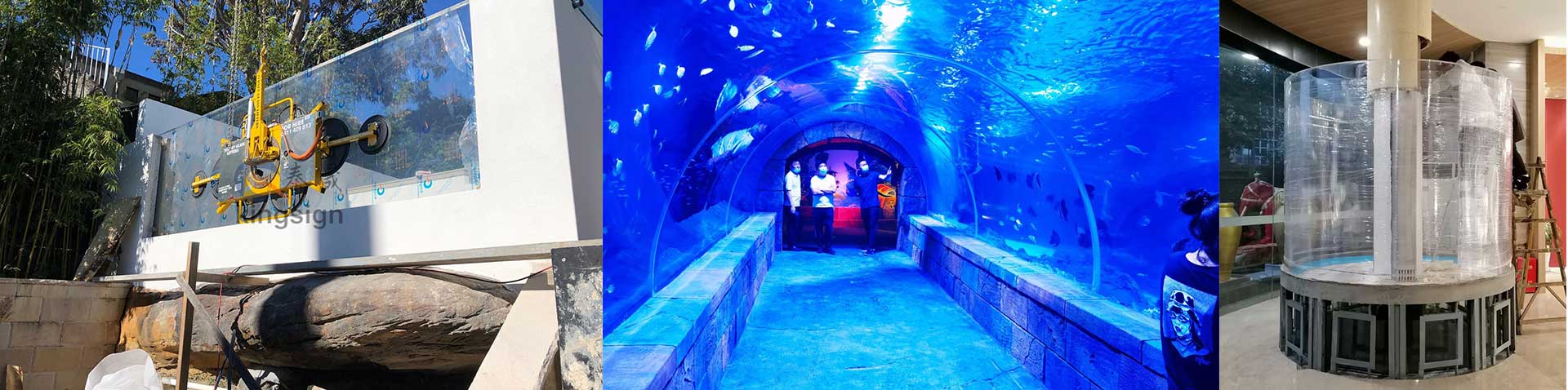
When I plan a display that feels alive rather than staged, I start with the viewing experience I want and work backward to filtration, lighting, and materials. Over the years, I’ve come to appreciate how KINGSIGN acrylic panels help me hide seams, push bolder curves, and keep the water column bright, which directly shapes any Aquarium Landscape I build. I’m after a living scene I can enjoy every day without fighting algae blooms or unstable parameters. In this guide, I’m sharing the practical framework I use to design a resilient Aquarium Landscape that balances biology, aesthetics, and long-term care.
Why Should the Story Of The Tank Decide The Layout First?
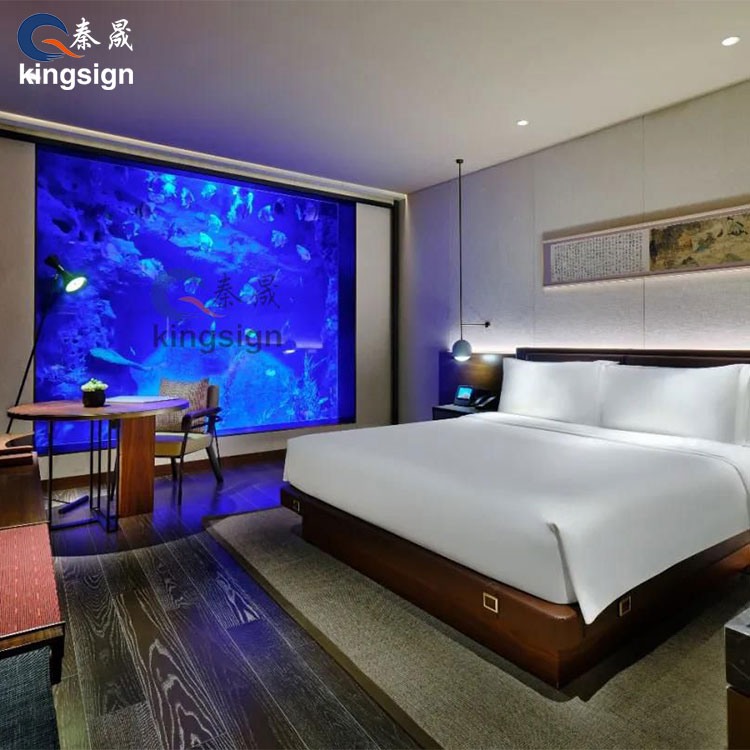
I always start with the narrative—riverbank, reef shelf, or mangrove edge—because story dictates rock height, plant density, flow direction, and fish selection. When the story is clear, the Aquarium Landscape stops feeling like a pile of parts and starts acting like a place. To lock that in, I sketch three silhouettes: front, side, and top. That sketch forces me to pick a dominant mass (the anchor), a secondary mass (the counterweight), and negative space for swimming lanes.
- Anchor point: one bold stone, root, or arch that sets the visual weight.
- Counterweight: a smaller cluster that balances the anchor without mirroring it.
- Negative space: clear sand or open water that frames the scene and keeps maintenance simple.
With clear silhouettes, equipment and hardscape no longer fight for attention; they serve the Aquarium Landscape instead.
What Materials And Substrates Give Me The Most Flexibility?
I use a mix of textures so light scatters naturally. Fine sands keep the scene clean, crushed lava adds porosity, and a thin nutrient layer supports rooted plants without turning the whole bed into a mess. For tanks built with modern acrylic, I lean on precise bends and low-iron clarity to push depth. That clarity makes mistakes obvious, which is a blessing: if I can hide tubing, cables, and overflows cleanly, the Aquarium Landscape reads as effortless.
- Rooted zones: capped soil or enriched capsules beneath a thin sand veneer.
- Rock work: structure first, then skin; I pin heavy bases before placing decorative faces.
- Wood: boil, then pre-soak; position branches to guide flow and block sightlines to hardware.
How Do I Choose Livestock That Supports The Layout Instead Of Breaking It?
I pick species that match the current and the furnishing density. Fast swimmers want lanes; shy fish need pockets. Shrimp and snails become my janitors, not decorations. If a fish uproots stems or chews leaves, I don’t force it to fit—I pivot the scape. Livestock harmony keeps the Aquarium Landscape intact longer, so I spend less time replanting and more time enjoying.
- Flow lovers: rasboras, danios, anthias—pair with linear rock lines and strong returns.
- Perchers: gobies, blennies—add ledges and gentle eddies.
- Grazers: otocinclus, trochus—introduce after biofilm appears to avoid starvation.
Which Lighting And Filtration Settings Protect Color Without Fueling Algae?
I set photoperiods to the plants’ pace, not my schedule. Intensity rises over two weeks, never overnight. On filtration, I oversize for volume but underspeed the pump at first to keep bacteria contact time high. Clear acrylic panels make minor haze visible, so stable nutrient export matters. When the Aquarium Landscape is balanced, I can stretch maintenance intervals without losing clarity.
- Photoperiod: begin at 6 hours; step up by 30 minutes weekly as plants settle.
- Filtration: use fine polishing pads during the first month; remove once water polishes itself.
- Nutrients: target consistency over perfection; small, regular dosing beats big swings.
Can A Simple Table Help Me Pick The Right Build Path?
I keep this quick reference on hand when planning a new Aquarium Landscape so choices stay honest to goals and maintenance reality.
| Goal | Recommended Layout | Substrate Strategy | Lighting Approach | Weekly Maintenance |
|---|---|---|---|---|
| Low upkeep display | One-sided island with wide negative space | Inert sand with root tabs near anchor plants | Moderate intensity, shorter photoperiod | Panel wipe, 15% water change, light pruning |
| High-color planted | Triangular scape with layered stems | Enriched base capped with fine sand | Higher PAR with staged ramp up | CO₂ check, dosing calibration, 30% water change |
| Reef-style rock focus | Open shelf with caves and arches | Aragonite sand, rubble in sump | High output with strong blue channel | Skimmer tune, media rinse, targeted algae grazing |
| Biotope realism | Root tangle with leaf litter margins | Thin soil pockets under leaves | Soft spectrum, dappled shading | Leaf refresh, gentle gravel vac, 20% water change |
How Do I Build Structure That Stays Solid For Years?
Nothing kills a scene faster than a rockslide. I drill and pin base stones, then glue skin pieces after I confirm flow. I leave a finger’s width between glass or acrylic and hardscape to allow an algae card to pass. That tiny gap keeps edges clean so the Aquarium Landscape stays crisp from every angle.
- Foundation before façade: lock heavy pieces to the bottom, then design the face.
- Flow mapping: a pinch of fish food shows where detritus collects; I adjust returns accordingly.
- Service lanes: invisible to viewers, obvious to me; hoses and scrapers must fit.
What Daily And Weekly Routines Keep The Scene Stable?
I keep routines light but consistent. Short, repeatable tasks beat occasional marathons. With clearer panels and tight seams, even small deviations show, so I correct them early and keep the Aquarium Landscape on track.
- Daily: quick acrylic pass near the substrate line, livestock headcount, skim surface film.
- Twice weekly: target-feed grazers, inspect plant roots, empty prefilter floss.
- Weekly: measure nitrate, phosphate, KH; log readings; change 15–30% of water.
Why Does Material Quality Change How The Aquascape Feels?
Panel clarity, stiffness, and seam quality affect color fidelity and perceived depth. With high-clarity acrylic, edges vanish, and the foreground blends into the room. That helps the Aquarium Landscape feel larger than the tank’s footprint. When seams are clean and deflection is minimal, I can run bolder arches and taller rock spires because I trust the envelope to hold steady.
How Do I Troubleshoot Common Headaches Without Starting Over?
Most issues respond to small, patient changes. I resist the urge to overhaul; I isolate one variable, adjust, and wait a full photoperiod before judging results.
- Dust algae on new builds: shorten light by 30 minutes, add gentle grazing, avoid scrubbing every surface at once.
- Stems melting after trimming: replant tops, reduce flow at the cut line, and stabilize CO₂ for a week.
- Cloudy water post-scaping: run fine polishing for 24–48 hours, then remove to prevent clog-driven flow loss.
That rhythm preserves the character of the Aquarium Landscape while steadily improving water quality.
Could A Simple Purchase Checklist Save Me From Expensive Do-Overs?
I keep a short pre-buy list so every item supports the plan rather than adding clutter.
- Layout tools: pins, epoxy, drill bits, bubble level.
- Substrate system: base enrichment, cap grain, slope retainers.
- Care kit: algae cards safe for acrylic, fine brushes, hose clips, spare O-rings.
- Lighting control: timer or app with smooth ramping, PAR notes for plant zones.
With the right gear, my Aquarium Landscape stays faithful to the sketch instead of drifting with every impulse buy.
Where Do I Go From Planning To A Finished Scene I’m Proud Of?
I set a 30-day cadence: week 1 hardscape only, week 2 planting, week 3 light ramp, week 4 livestock. That staggered approach lets bacteria, roots, and flow establish in sequence. When the curtain finally lifts, the Aquarium Landscape looks settled rather than raw, and the maintenance curve stays gentle.
Would You Like Help Turning Your Vision Into A Clear, Resilient Display?
If you want to translate a sketch into a living scene—whether it’s a calm riverbank or a dramatic reef shelf—I’m happy to share a tailored plan that fits your tank size, budget, and routine. Tell me your story, the species you love, and the space where the aquarium will live, and I’ll map a layout, substrate stack, and weekly rhythm that protect color and clarity. If you’re ready to build or need a second pair of eyes on an existing Aquarium Landscape, contact us today and let’s plan the upgrade together—just send an inquiry with tank dimensions and goals, or contact us now so we can get your Aquarium Landscape from idea to reality.